
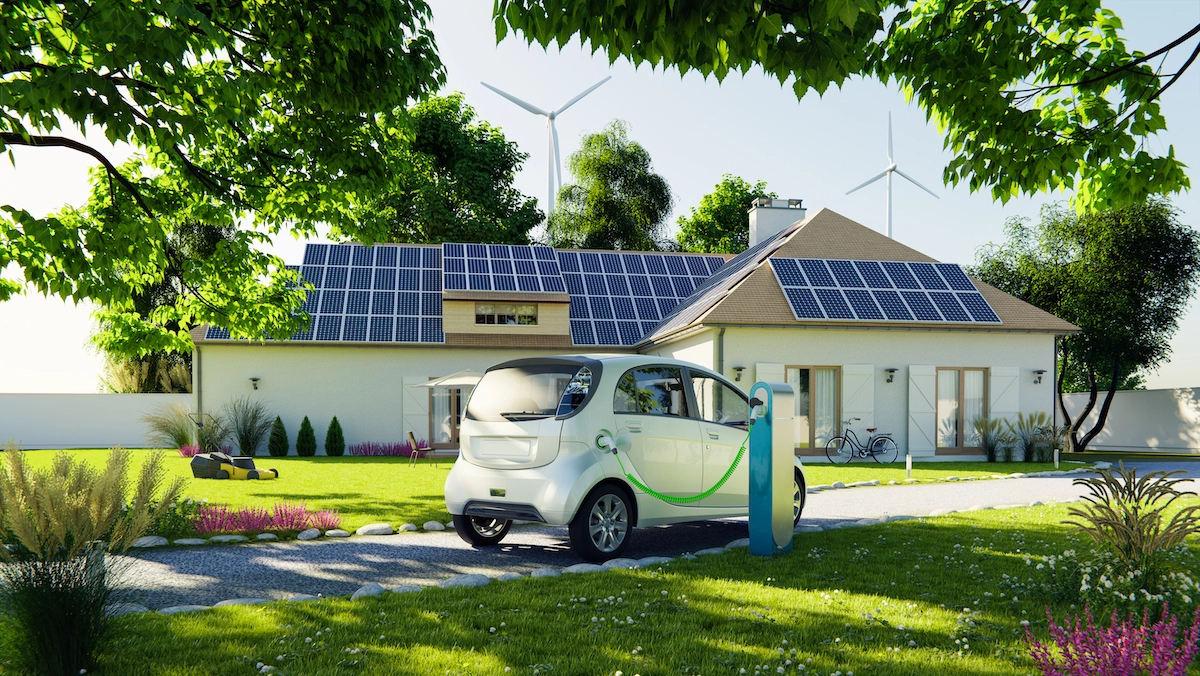
| Quick answer: Yes — a home solar panel system can fully power an EV charger in Malaysia. With Malaysia receiving an average of 4.5–5.5 peak sun hours daily, homeowners can use solar power in Malaysia to charge their electric vehicles at home while significantly reducing electricity costs. |
As EV adoption continues growing with models like the BYD Seal, Proton eMas 7, and Tesla Model 3, more Malaysians are combining solar panel installation with home EV charging for long-term savings and energy independence.
How Solar Power Works with EV Charging
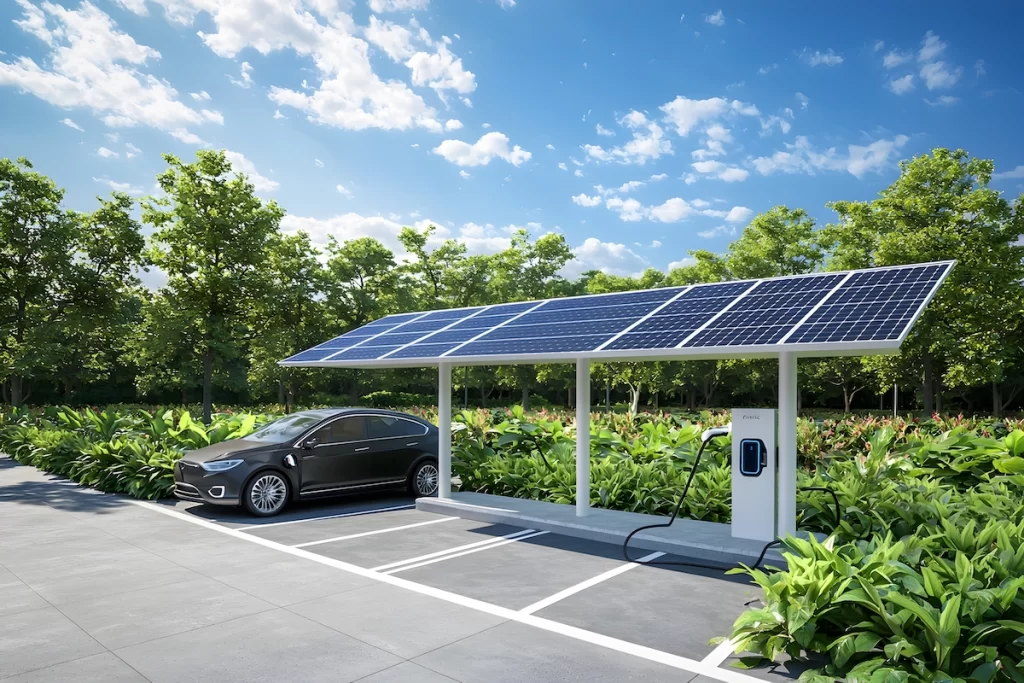
A solar-powered EV charging system follows a simple energy flow:
Solar panels
→
Inverter
→
Home Eletrical System
→
EV Charger (EVSE)
→
EV Battery
Your solar panels generate DC electricity, which is converted into AC power by the inverter. The electricity then powers your home appliances and your EV charger.
During the daytime, your EV can charge directly using solar energy. Any excess solar power is exported to the TNB grid through Malaysia’s Solar Accelerated Transition Action Programme (Solar ATAP).
Real Home Scenario: The Solar + EV Setup
Example Household — Subang Jaya, Selangor
| Detail | Value |
| EV Model | BYD Seal (82.5 kWh battery) |
| Weekly driving distance | ~350 km |
| Monthly EV Charging Usage | ~250 kWh |
| Home solar system size | 10 kWp rooftop |
| Estimated daily solar generation | 40–50 kWh/day |
| EV charger type | 7.4 kW AC (Type 2, Mode 3) |
| Charging time (10%→80%) | ~8 hours |
A 10 kWp solar panel at home in Malaysia can generate approximately 1,300–1,500 kWh monthly.
Since the EV only consumes around 250 kWh/month, most homeowners generate enough excess energy to offset EV charging costs through ATAP credits.
Cost Comparison: Solar vs Grid EV Charging
RM0.57
TNB rate per kWh (domestic Tier 3)
~RM143
Monthly EV charging cost (grid only)
~RM0
Effective EV charging cost (solar + ATAP)
5–7 yr
Typical solar payback period in Malaysia
| Charging Method | Cost per Month | Estimated Savings/Year | Carbon Footprint |
| Grid charging (TNB) | RM 120–160 | — | Medium |
| Public DC fast charger | RM 200–350 | — | Medium |
| Home solar + EV charger | RM 0–30 (ATAP offset) | RM 1,400–1,800 | Near Zero |
Key Numbers
- TNB domestic electricity rate: ~RM0.57/kWh
- Typical solar payback period: 5–7 years
- Effective EV charging cost with solar: Near zero
What Size Solar System Do You Need?
The ideal system size depends on your household electricity usage and EV charging needs.
| EV Battery Size | Typical Range | Monthly EV Energy Usage | Recommended Solar Add-on |
| 40–50 kWh (e.g. MG4) | ~300 km | ~130 kWh | +2–3 kWp |
| 60–75 kWh (e.g. Proton eMas 7) | ~450 km | ~200 kWh | +3–4 kWp |
| 80–100 kWh (e.g. BYD Seal, Tesla) | ~500 km | ~260 kWh | +4–6 kWp |
Most Malaysian households installing solar for EV charging should target a 10–16 kWp system.
This ensures enough solar generation to support both home consumption and EV charging.
Benefits of Solar Power + EV Charging
Advantages
- Near-zero EV charging cost
- Lower monthly electricity bills
- Reduced dependence on TNB tariff increases
- Environmentally friendly transportation
- Increased property value
- Better long-term ROI
Things to Consider
- Higher upfront investment
- Roof suitability matters
- ATAP approval takes time
- EV chargers require dedicated wiring
- Battery storage increases system cost
Frequently Asked Questions
Yes. In a grid-tied solar system (the most common setup in Malaysia), your EV charger draws solar power during the day through your home switchboard. You don’t need a home battery — the TNB grid acts as your “virtual battery” via the Solar ATAP.
A 10 kWp solar system in Malaysia typically costs RM 25,000–40,000 installed. A home EV charger (7.4 kW AC) adds RM 2,500–5,000 including installation and wiring. Combined, most homeowners spend RM 28,000–45,000 upfront, with a payback period of 5–7 years when accounting for EV charging savings.
Yes. The Solar ATAP offers 1:1 offset for exported solar energy. Additionally, EV buyers benefit from full import and excise duty exemptions until end 2025 under Malaysia’s EV promotion policy. Homeowners may also claim income tax relief on solar system purchases under LHDN guidelines.
Solar panels still generate 10–25% of their rated output on overcast days. For charging, your EV will draw from the TNB grid on low-sun days, but your accumulated ATAP credits from sunny days help offset this cost. Malaysia averages 8–10 sunny hours daily, so extended cloudy periods are uncommon.
For most Malaysians, a 7.4 kW (32A, Type 2) AC wall charger is sufficient — it fully charges a 60–80 kWh EV overnight in 8–11 hours. If you need faster home charging, a 22 kW three-phase charger is available but requires a three-phase TNB supply, which costs extra to upgrade.
Yes. Your solar system must be approved and registered under ATAP with TNB and the Energy Commission. Your EV charger wiring must be handled by a Wireman or Electrical Engineer registered with Suruhanjaya Tenaga. Both are standard processes your installer and electrician will manage for you.

Is Solar Power Worth It for EV Owners in Malaysia?
For homeowners planning long-term EV ownership, combining solar panels with EV charger installation is one of the highest-return home upgrades available today.
The combination helps reduce:
- Fuel expenses
- Electricity bills
- Exposure to rising energy prices
With lower solar panel costs, government incentives, and increasing EV adoption, the timing has never been better for Malaysians to invest in solar power.
Ready to Install Solar Power and an EV Charger?
Get a free consultation from a registered Malaysian solar contractor to calculate the ideal system size for your home and EV usage.